
TikTok Shop’s Beauty Boom and the European Shift Ahead
- tracyngtr
- Jun 8, 2025
- 8 min read
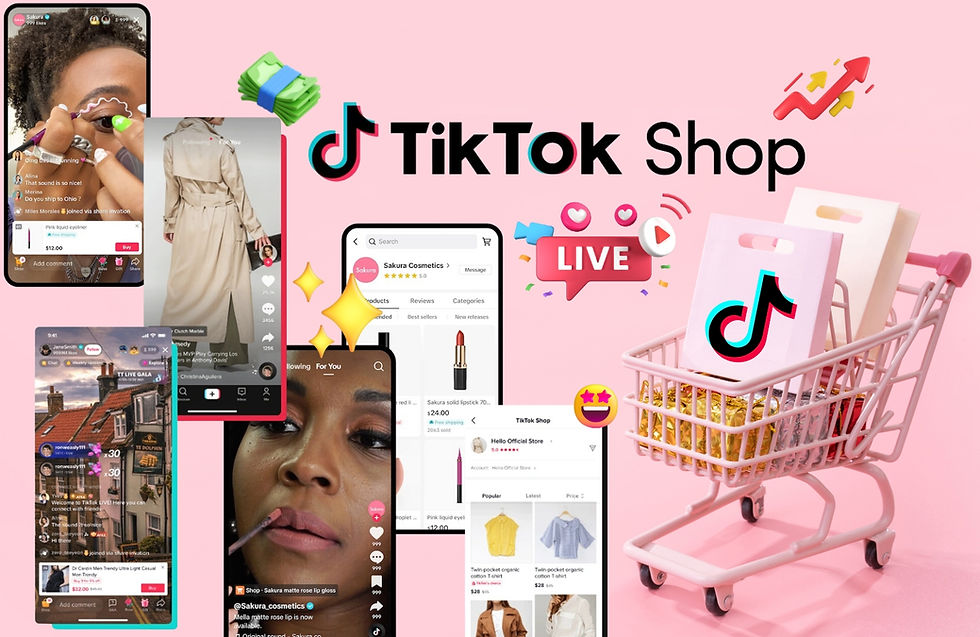
TikTok Shop is rewriting beauty retail, fusing showtime shopping and social selling to reshape Europe’s beauty landscape. Brands that adapt to this new world of creator-driven commerce will win the next generation of consumers.
TikTok, once just an entertainment app is rapidly becoming a beauty retail powerhouse. In the UK, a beauty product is now sold via TikTok Shop every two seconds, making TikTok the country’s fourth-largest beauty retailer (behind only Amazon, Boots and LookFantastic). The rise of 'social commerce' is unmistakable: the UK’s social commerce market is projected to more than double to £15.7 billion by 2028, reaching about 11% of all online retail sales.
Beauty is the crown jewel of this trend. In fact, about two in five UK social media users have already purchased beauty products through platforms like TikTok, a higher adoption rate than for any other product category. For beauty brands and retailers, this shift signals a new era where short-form video, creator-driven content, and in-app shopping converge to redefine how consumers discover and buy products.
The Asian Blueprint: Social Commerce at Scale
Asia, particularly China and Southeast Asia, provides a glimpse into just how powerful TikTok-powered social commerce can become. TikTok’s sister app Douyin in China has pioneered the model, with livestream shopping festivals that dwarf traditional retail events. In a single 12-hour livestream in 2021, top Chinese influencer Austin Li Jiaqi (the “Lipstick King”) sold an astonishing $1.7 billion worth of goods, primarily beauty products. His fellow livestreamer Viya sold $1.25 billion in a 14-hour session the same day. These eye-popping figures underscore how live online selling, driven by charismatic hosts and one-click purchases, has become a mainstream way for consumers in China to shop for beauty.
Beyond individual superstars, the overall market numbers are staggering. In 2024, TikTok Shop’s Southeast Asia business reached $18.7 billion in gross merchandise value (GMV) – surpassing TikTok’s entire global GMV from 2023. Markets like Thailand saw $5.7 billion in TikTok Shop sales (up 11% year-on-year), with Indonesia close behind at $4.2 billion, and strong contributions from Vietnam ($3.43 B) and the Philippines ($2.7 B). Notably, beauty and personal care is the leading category on TikTok Shop across these countries – accounting for roughly 30% of total TikTok Shop sales in Indonesia and about one-third of the top 10 product categories in Thailand.
TikTok Shop’s Rise in the West
TikTok Shop’s journey in the UK and Europe started a bit more cautiously, but it is now hitting its stride. Launched in the UK in 2021, TikTok’s commerce features initially met some cultural resistance. Live shopping didn’t take off immediately, as Western consumers weren’t as used to buying from impromptu video streams. However, attitudes are shifting. By 2024, TikTok Shop UK reached $1 billion in annual GMV, with an average of ~$83 million in sales each month. Impressively, cross-border sales into the UK (overseas merchants selling via TikTok) grew 161% last year, indicating both domestic and international sellers are finding eager audiences on the app.

Several factors signal that TikTok Shop is gaining a strong foothold in Europe:
Mainstream Consumer Adoption: TikTok has become a legitimate shopping destination for younger consumers in particular. In the UK, 23.6% of Gen Z online beauty shoppers have already bought from TikTok Shop (versus ~10% of Gen X) according to NielsenIQ, and usage is growing even among older age groups. A recent consumer survey in the U.S. similarly found 45% of Americans have made a purchase via TikTok Shop, showing that nearly half of social media users are now social shoppers. The convenience of one-click in-app checkout and the thrill of discovering new products through the “For You” feed are resonating broadly.
Explosive Sales Growth: Once TikTok introduced shopping in new Western markets, growth has been exponential. In the U.S., which launched TikTok Shop in 2023, beauty product sales grew 116% month-on-month on average between April and November 2023 – a blistering growth rate as awareness spread and holiday promotions kicked in. While the absolute sales in the U.S. started smaller (TikTok Shop ranked as the 12th biggest beauty e-retailer in the U.S. by late 2023), the trajectory points upward. The UK, having had a head start, now sees a beauty product sold every couple of seconds via TikTok, underlining how quickly it has become ingrained in shopping habits.

Growing Trust and Habit: Early concerns about buying products seen on TikTok (quality, authenticity, etc.) are being addressed as the platform improves its commerce infrastructure and policies. Positive experiences are turning one-time experimenters into repeat buyers. TikTok’s algorithm also builds a habit. If a user engages with beauty content, their feed fills with more shoppable beauty videos, creating a reinforcing loop of discovery and purchase. By 2025 and beyond, this could normalize social shopping in the same way Amazon normalized one-day delivery.
Crucially, TikTok Shop’s success in the West will depend on localising the social commerce formula. Western consumers may never replicate the exact frenzy of China’s live shopping marathons, but they are warming to a uniquely TikTok blend of content and commerce. The UK market, for instance, has found strength in short-form shoppable videos and scheduled live events, often around product launches or seasonal sales, rather than constant livestreaming. As consumer comfort increases, we can expect TikTok Shop to continue climbing the ranks of top retailers in Europe, perhaps even challenging legacy beauty retailers for the #1 spot by the end of the decade.
Beauty: The Crown Jewel of Social Commerce
It’s no coincidence that beauty is leading the social commerce charge. Beauty products thrive in the TikTok environment because buying makeup or skincare is a highly visual, demonstrative, and personal experience. TikTok’s format allows users to see products in action – swatched on real skin, applied in real time, with honest reactions – creating a level of authenticity and excitement that traditional ads can’t match. This has made TikTok a kingmaker for beauty trends: a single viral tutorial or “get ready with me” video can send demand for a product skyrocketing overnight.
Some key reasons beauty is so dominant on TikTok Shop:
Visual Storytelling: Short videos let creators show transformations (before/after using a product), application techniques, and results in seconds. Consumers can immediately judge if a foundation’s finish or a hair serum’s effect appeals to them. This seeing-is-believing aspect drives conversion as viewers feel more confident buying a product after watching someone they trust use it.
Community & Authentic Reviews: TikTok beauty content often feels like advice from a friend. Comments sections turn into forums where users swap tips (“It worked for my skin!”) or warnings. This sense of community builds trust. In a survey, 40%+ of UK social shoppers said authenticity and real reviews are what motivate them to buy beauty products via social media. Brands like e.l.f. and Fenty Beauty have leaned into this by partnering with a wide range of micro-influencers who give candid reviews rather than polished ads.
Endless Discovery: The TikTok algorithm is superb at surfacing niche or new beauty products that a user might love. It ranks as the #1 platform for product discovery in categories like beauty and fashion in multiple surveys. Scrolling TikTok, you might stumble upon an indie skincare brand or a new makeup hack and with TikTok Shop, you can buy it on the spot. This seamless discovery-to-purchase journey turns casual browsing into instant sales.
Fast Trends and FOMO: Beauty moves fast on TikTok. One week it’s all about soap brows, the next it’s dewy “glass skin.” TikTok accelerates trend cycles, and TikTok Shop capitalizes on the fear of missing out (FOMO) by making trending items available immediately. Limited-time flash sales during a viral trend push viewers to check out before the craze (and inventory) fades. This urgency particularly sways younger consumers who don’t want to miss the “next big thing” in beauty.
Real-world results reflect beauty’s primacy in social commerce. In the U.S., beauty ranks as the #2 most-shopped category on TikTok Shop (second only to apparel). In the UK, beauty was the first category to truly explode on TikTok Shop; as noted, one in every five beauty products sold online in the UK might soon be flowing through social platforms. Brands are seeing tangible revenue from TikTok. For example, buzzy makeup and skincare brands like Tarte Cosmetics, One/Size, and The Ordinary earned a combined $104 million+ via TikTok Shop in roughly a year’s time. Even mass-market staples like L’Oréal Paris run regular TikTok Shop promotions (e.g. offering 50% off viral products during TikTok’s Summer Sale), underscoring that from indie upstarts to global giants, beauty companies view TikTok as a critical sales channel.
Creators, Communities and the New “Shopfluencers”
One of the most transformative aspects of TikTok Shop is how it has created a new ecosystem of creators who blend content and commerce. On TikTok, any user can become a brand ambassador or a salesperson, whether it’s a professional makeup artist live-streaming a tutorial or a college student posting a 30-second review of their favorite moisturizer. This democratization of influence is giving rise to new roles and opportunities in the beauty industry:
Key Opinion Leaders (KOLs) & Key Opinion Consumers (KOCs): In Asia, these terms have emerged to describe influencers who drive sales. KOLs are often well-known content creators or experts (for example, a beauty vlogger with millions of followers) whose product recommendations can lead to instant sell-outs. KOCs are more like everyday power-users – micro-influencers or even regular customers with smaller followings but high credibility – who create grassroots buzz. Both are crucial on TikTok. A mid-tier creator’s genuine rave about a serum can sometimes carry more weight than a celebrity endorsement, because followers see them as peers. Brands are now seeding products with armies of these creators to spark waves of authentic reviews.
Affiliate Marketers: TikTok’s platform makes it easy for creators to become affiliates earning commissions on any sales they drive through special links. This has supercharged the social selling economy. The UK has seen an “increasing number of affiliate creators” entering the market as TikTok Shop gains traction. In Southeast Asia, affiliate referrals are a major sales driver, and the same pattern is emerging in Europe. For creators, this opens a monetisation path beyond just ad revenue or sponsorships; for brands, it’s like having a decentralized salesforce. A recent study found that TikTok’s top five beauty brands (which are largely indie brands grown via TikTok) also had 121% more shares and 82% more video views than average – indicating that high sales go hand-in-hand with high social engagement. Affiliate creators actively sharing and hyping products are a big part of that equation.
Live Hosts and Entertainers: Hosting live shopping streams has become a professional role of its own. Charismatic hosts keep viewers engaged for hours with interactive chats, giveaways, and product demos. In the UK, TikTok has tapped popular creators for marathon livestreams. For example, beauty influencer Made by Mitchell hosted a 12-hour live sale with guests including other makeup artists and even a reality TV star. These hosts borrow tactics from home shopping TV but make it Gen Z-friendly: fast-paced, candid, and driven by personal charisma. The best hosts build a loyal audience who tune in regularly, effectively creating a new media channel for brands.
Celebrity and Brand Collaborations: As TikTok Shop grows, even traditional celebrities and big brands are getting in on the act. In Asia, pop stars and actors have held live shopping events that draw millions of fans. In the West, we’re seeing early signs of this – e.g. during TikTok Shop’s promotions, UK reality TV personalities have co-hosted streams, and brands like Rare Beauty by Selena Gomez have done TikTok live events featuring the founder. This trend blurs PR, entertainment, and retail into one: a celeb might appear on a TikTok live not just to endorse a product but to actively sell it to you in real time.

For beauty marketers, this creator-driven model demands a new playbook. Success on TikTok Shop isn’t just about uploading your product catalog; it’s about building relationships with creators and communities. Many brands are investing in creator partnerships, providing sample products early to spur buzz, and even recruiting in-house talent who can represent the brand in TikTok videos and lives. The authenticity and energy these creators bring can humanize a brand and create the kind of viral moments that translate to sales. As Nora Zukauskaite, TikTok Shop UK’s marketing director, put it: “If you are a brand in the Gen Z space, being on TikTok Shop is a must”. But beyond Gen Z, TikTok’s audience is broadening – the fastest-growing user segments on the platform are now older age groups – so brands are learning to leverage creators who can appeal to different demographics, from teen beauty enthusiasts to mature skincare aficionados.


Comments